
Finally, the south west extension to the metro was opening. This was the conversion of the heavy rail Bankstown Line to Metro. A few years ago, we were told by politicians that the Bankstown Line may be closed for up to a year. It was closed for more than two years.
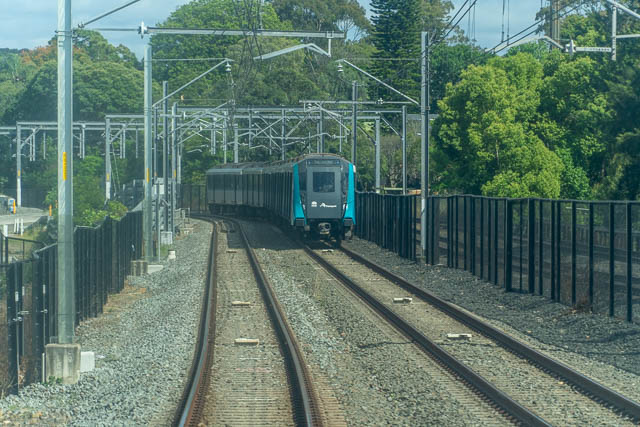
I walked to my local station – Dulwich Hill and caught a metro train to Sydenham, where I met Sue, and we then travelled all the way to Bankstown. We then returned stopping briefly at Hurlstone Park station and then at Dulwich Hill Station. We then did a walk along the Greenway to Hawthorne and came back by light rail to Dulwich Hill. We then travelled by the metro all the way to Tallawong and back.
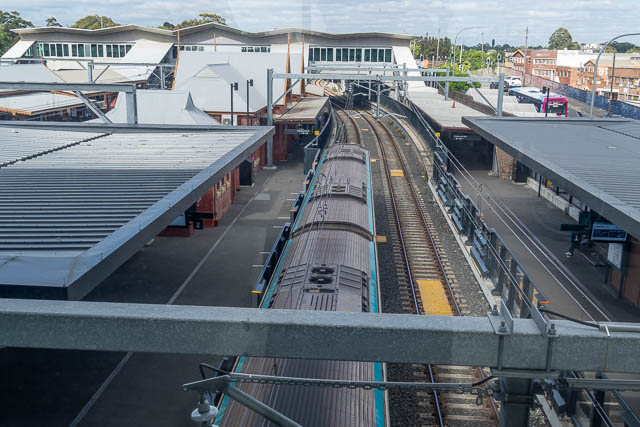
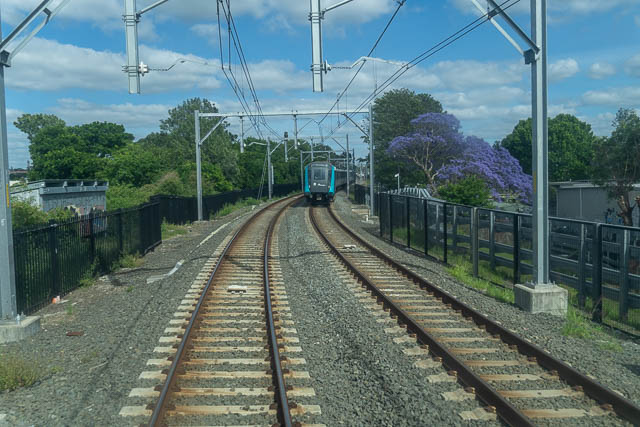
Marrickville Station
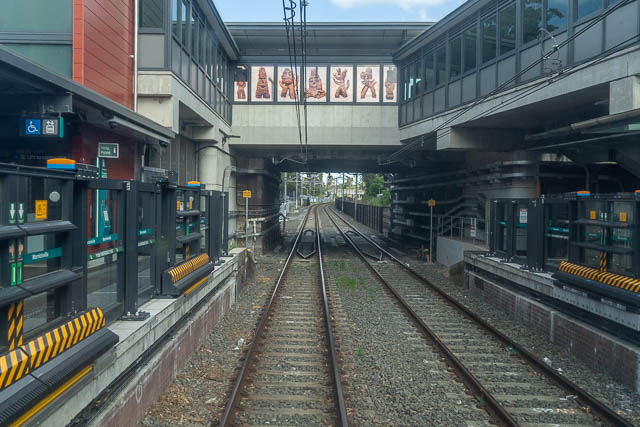
Approaching Dulwich Hill Station –
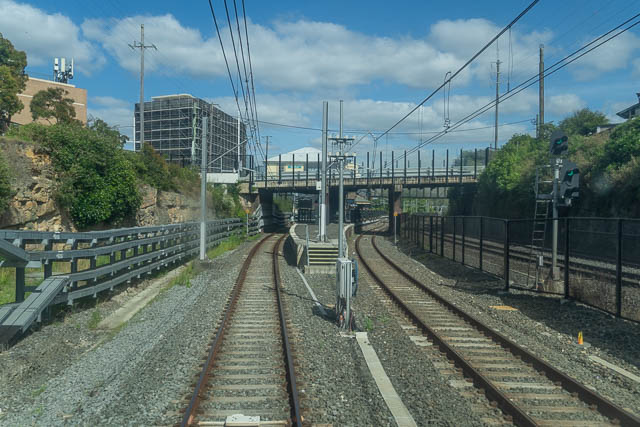
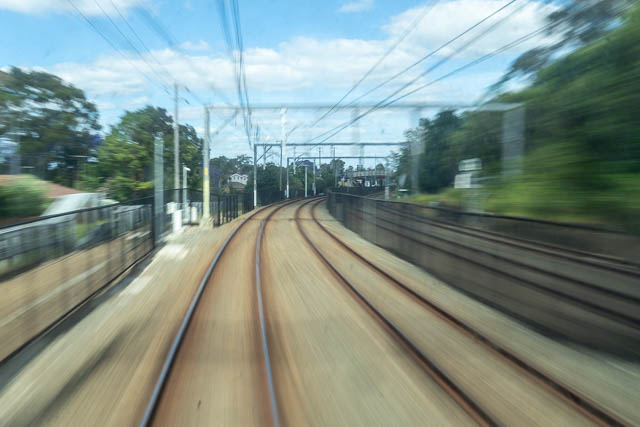
Each station has a large building that houses the control equipment for that section of line, and there is a series of large conduits all along the line. These probably contain control and power cables.
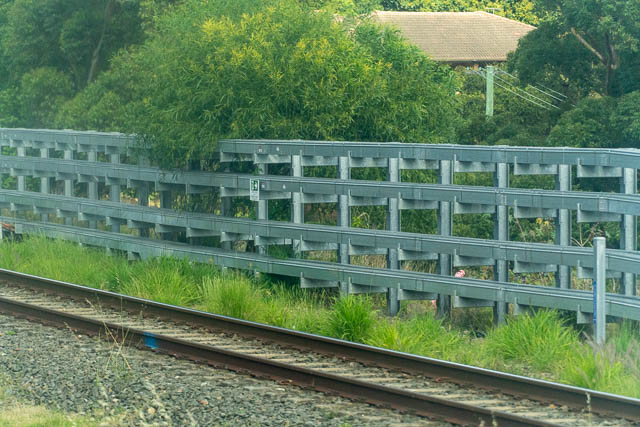
Along the line, there are switches allowing trains to swap to the other track in case of problem further along.
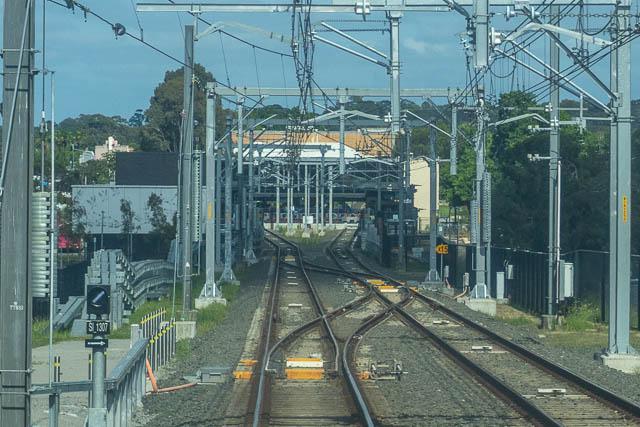
Approaching Bankstown. Note the control building on the left.
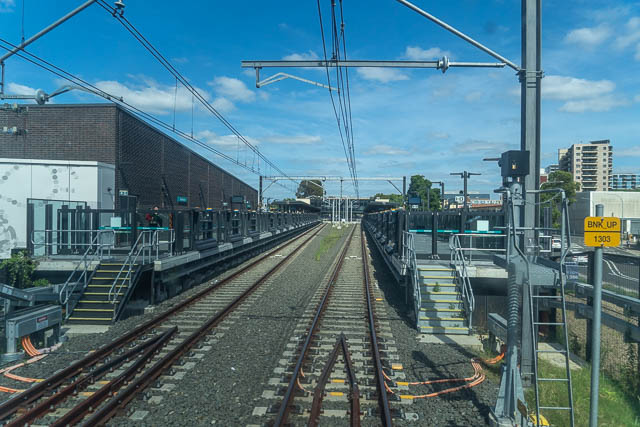
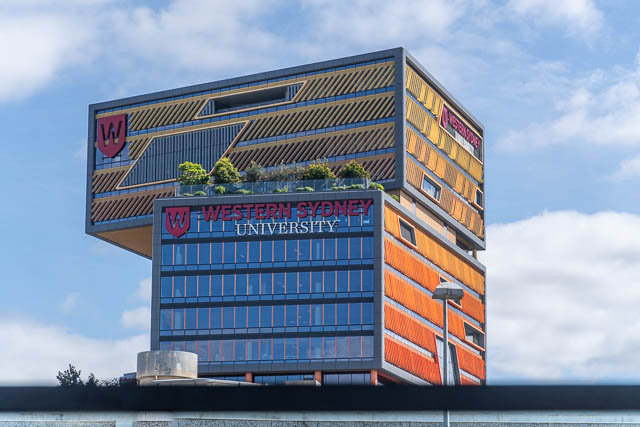
Bankstown in a university town.
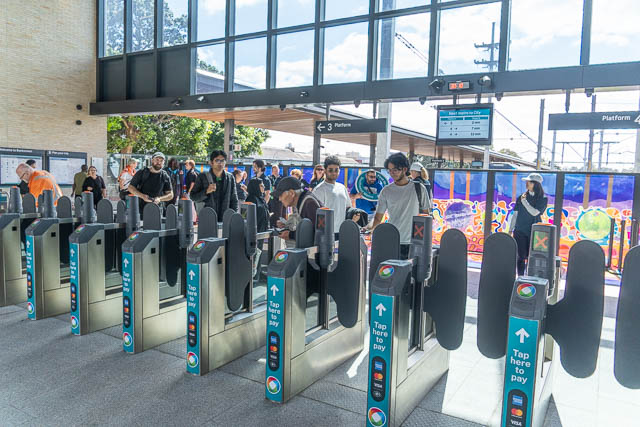
The old station – heavy rail trains depart from here to Lidcombe.
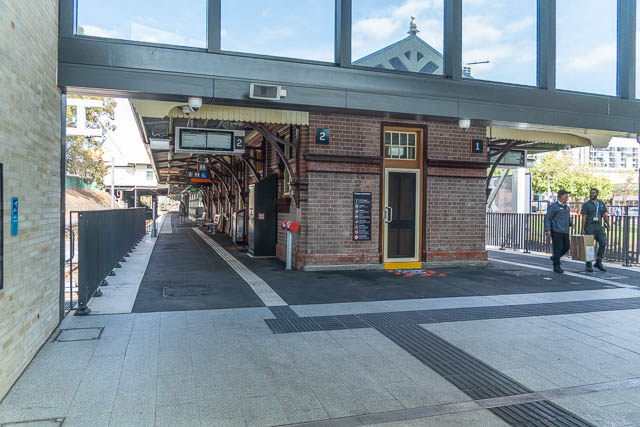
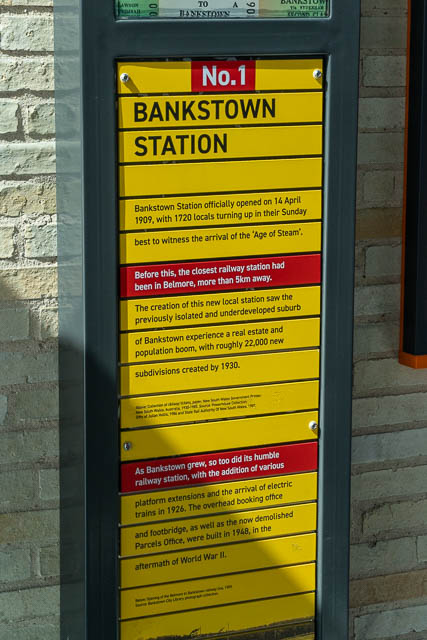
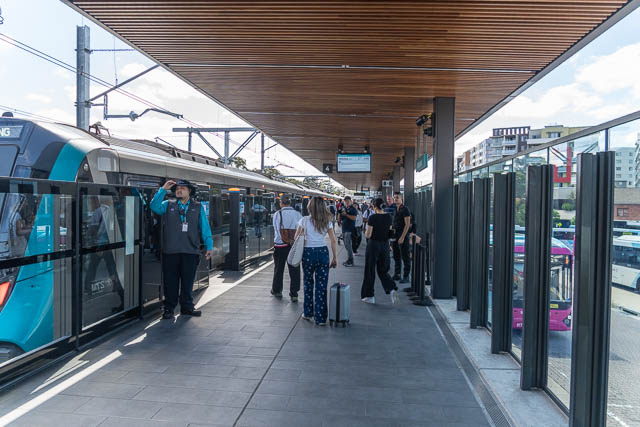
Hurlstone Park
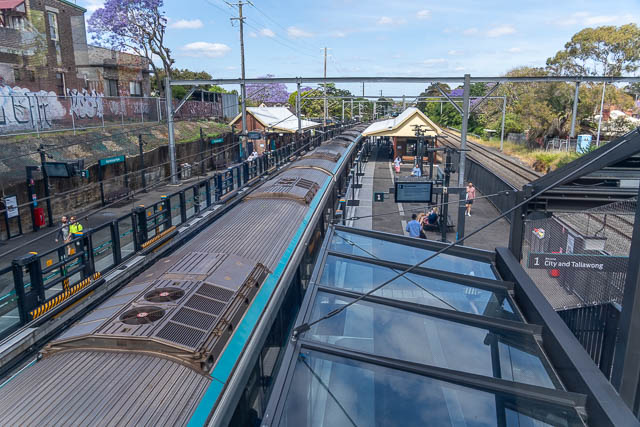
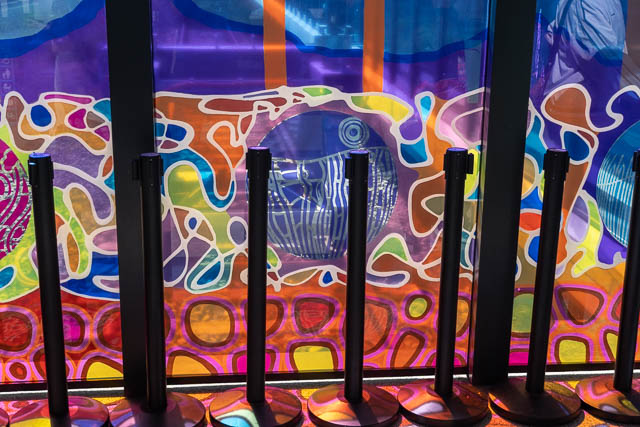
Artwork
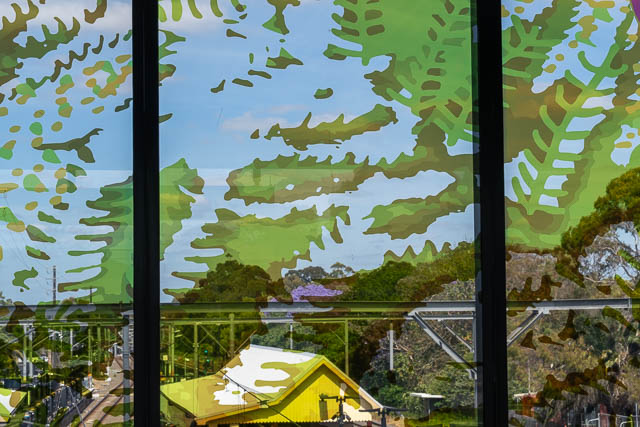
Artwork at Dulwich Hill –

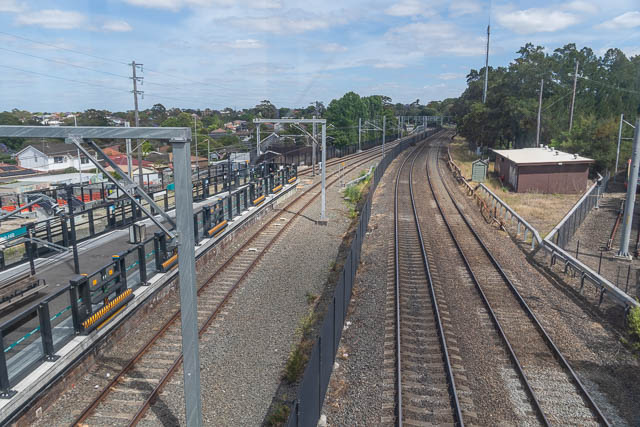
Metro line and good line at Dulwich Hill. The light rail line is further to the right.
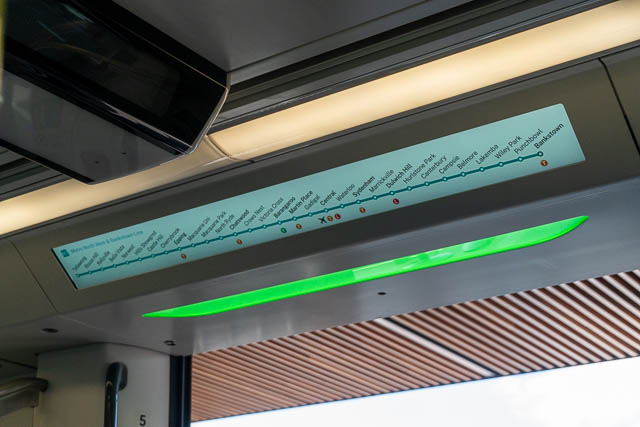
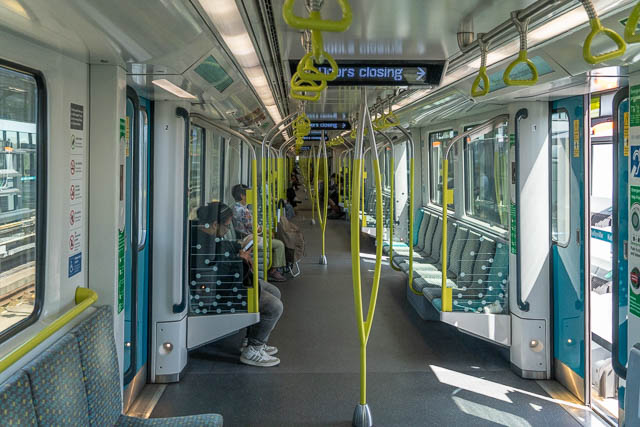
Interior of the Alstom Metropolis train used on the line.
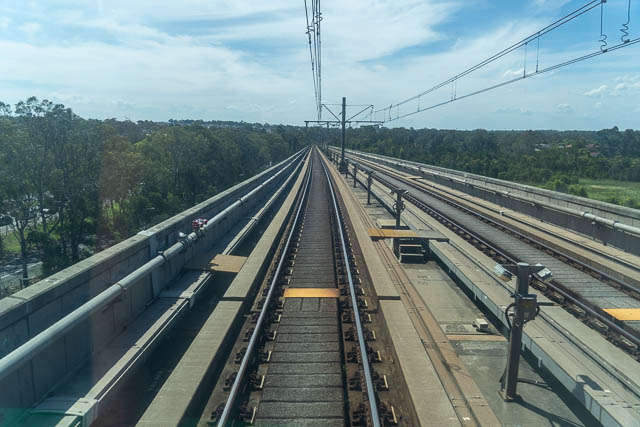
Near Tallawong –
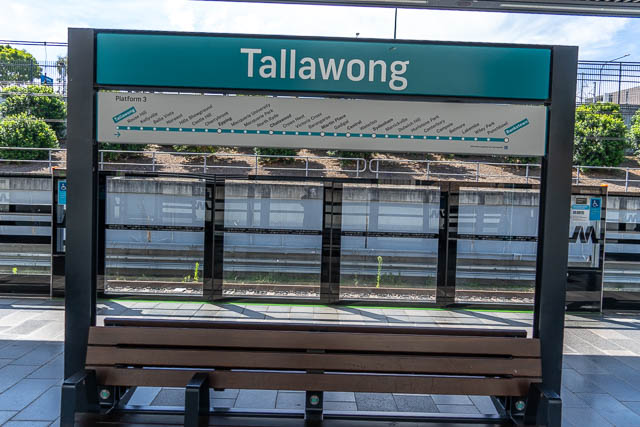
The sign has been updated –
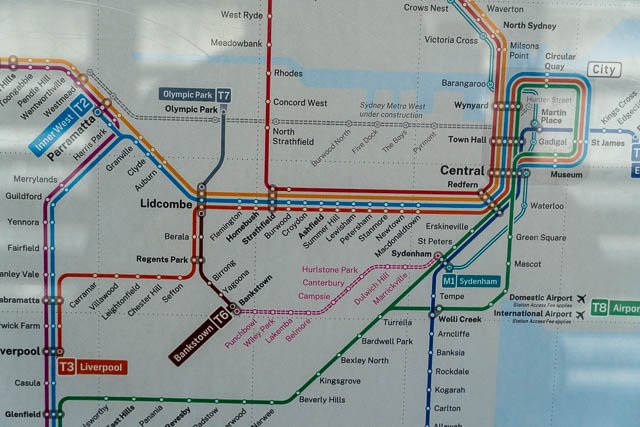
But bot the network map –
Coning back –
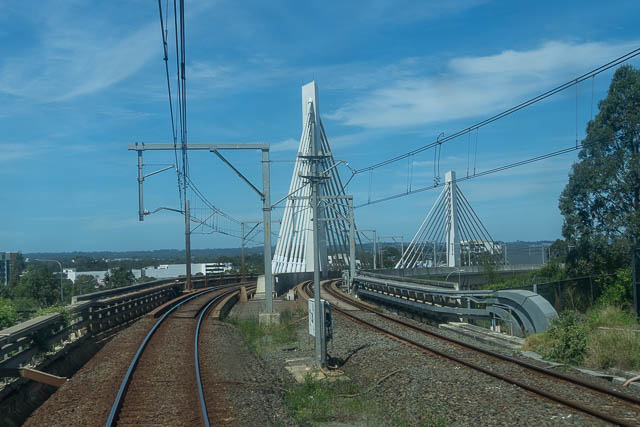
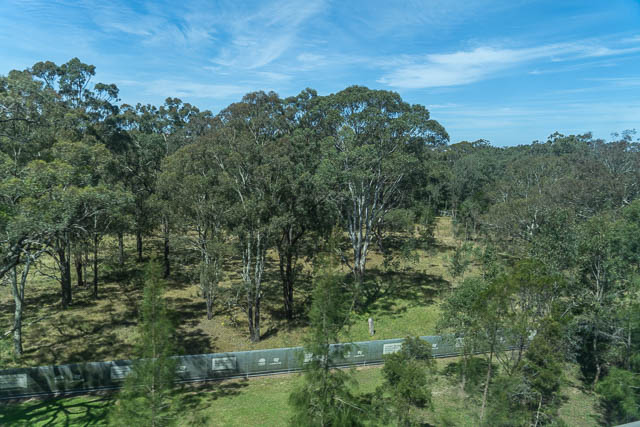
Near the dive at Bella Vista –
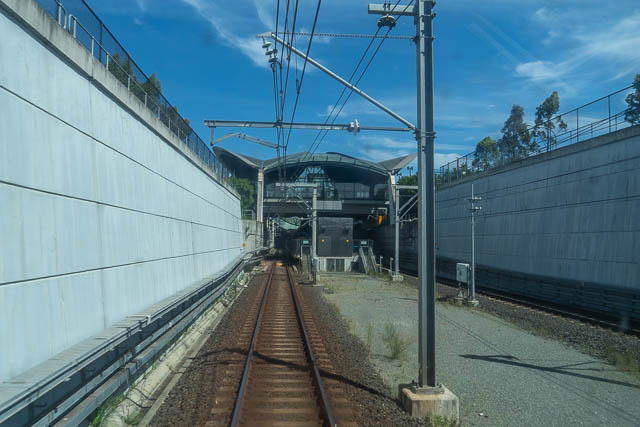
And back at Dulwich Hill –
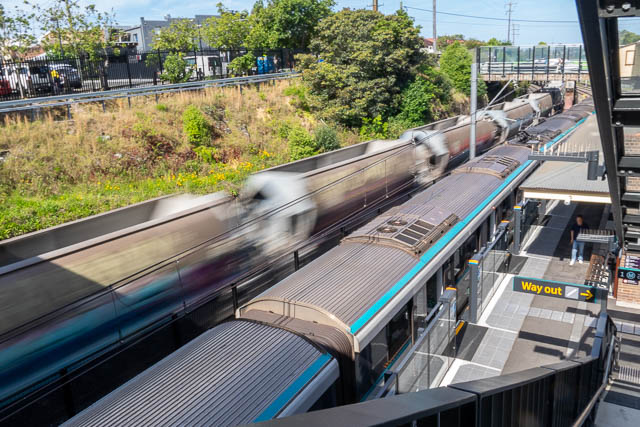
It is interesting to compare the line when it was heavy rail compared other the new metro.
The heavy rail used Waratah rolling stock.
Waratah
- 896 seats
- 1200 total (normal operation)
- 2150 max (special events)
Per hour peak (7 trains per hour used to run from Dulwich Hill during peak times)
- 7 x 896 = 6,272
- 7 x 1200 = 8,400
- 7 x 2150 = 15,050
Per hour off peak (4 trains per hour)
- 4 x 896 = 3,584
- 4 x 1200 = 4,800
The metro uses Alstom Metropolis rolling stock
Metro
- 378 seats
- 1100 total
- 17,000 per hour per direction
- 40,000 designed peak
- 17,000/1100 = 15.455 trains per hour
- Seated (based on 15 trains per hour)
- 378 x 15 = 5,670
From this, we can see that the metro has a lower number of seats available during peak times compared to heavy rail. And the off peak frequency of services is not that different (a heavy rail train every 15 minutes compared to a metro train every 10 minutes). Travel times with the metro are less. But with clever timetabling the heavy rail did not do too bad with trains in peak hour missing various stations.
The frequency of metro trains can be increased to one train every 3 or even 2 minutes, and there is capacity at all the metro stations to extend the length of the trains by adding extra carriages.
The conversion to metro was very expensive and took a long time, with the line not available for over two years. Could the money have been better spent putting in a new metro line to places not served by any rail service?
Other factors in favour of the metro are disconnecting the Bankstown Line from the City Circle – which reduces congestion and improves network reliability. And accessibility is much better on the metro.