In 2017, I had been on a walk out along the old shale railway from the Darling Causeway to their end of the ridge, where a single rope incline railway operated. But on that rip, we had not been down the incline to the old mining ruins. They seemed very interesting and well worth visiting. Important industrial heritage. But I had assumed the were on private land. This turned out to be only partly true. The incline and old mines are mainly on crown land. But the first part of the walk out from the Dar sling Causeway passes through private land, and there are important industrial ruins on private land in the valley.
This time, thanks to an old friend, Tom Williams, permission from the landholders had been obtained. Tom also joined Bob and myself on the visit.
Bob and myself met Tom at the top of the Hartley Vale Road, where it meets The Darling Causeway. And we then set off along the old railway formation.
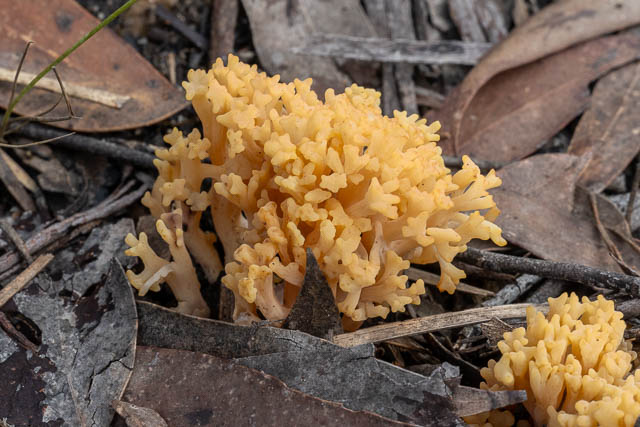
I spotted some nice coral fungi. Ramaria sp. –
The railway formation is on embankments and cuttings and easy to follow. Back when the mines were operating there was a 1m gauge railway operating here that went to Hartley Vale Station (near the start of our walk).

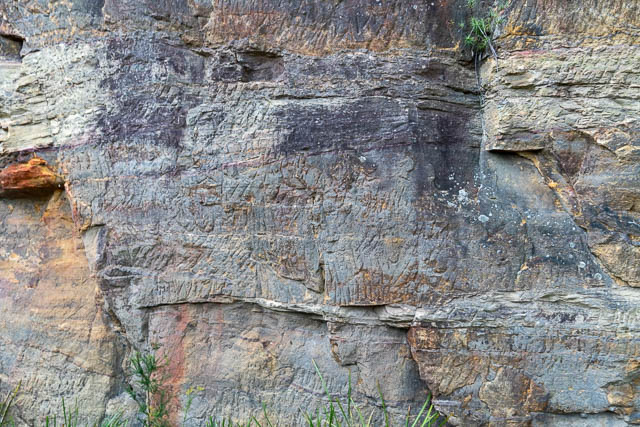
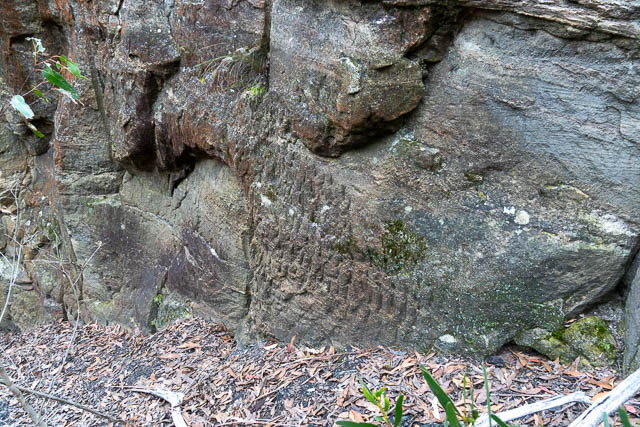
In places we could see old pick marks –
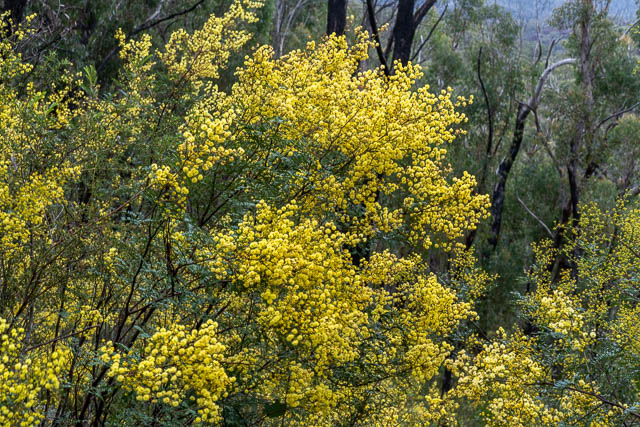

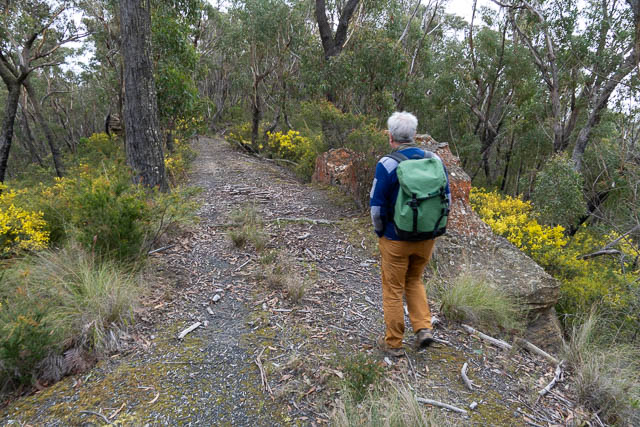
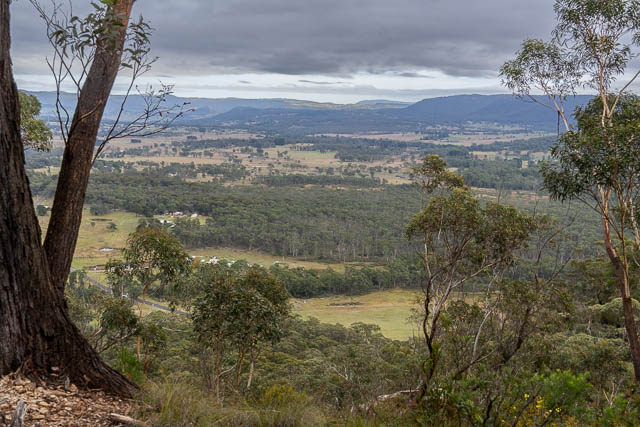
We got views of there Hartley Vale –

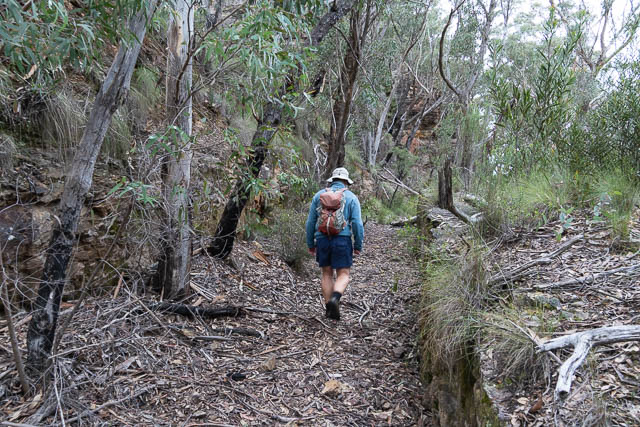
Here Bob is entering a cutting –

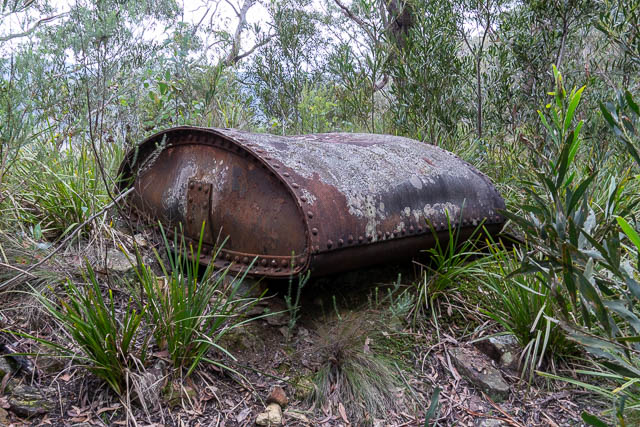
And near the end of the ridge is this old boiler –
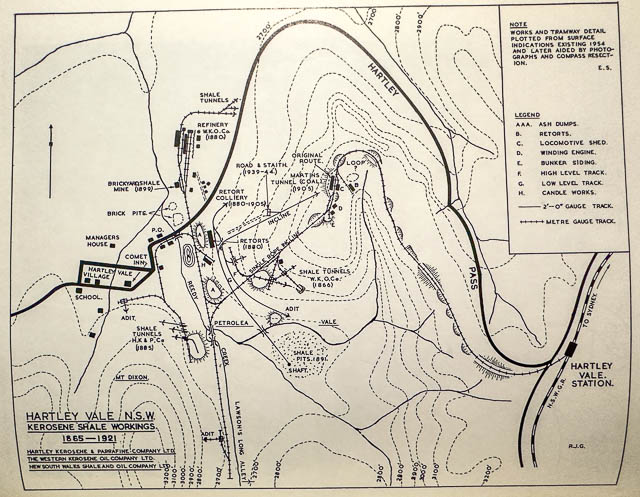
I had copy of the map from “Shale Railways of NSW” by Eardley and Stephens.
More pick marks –

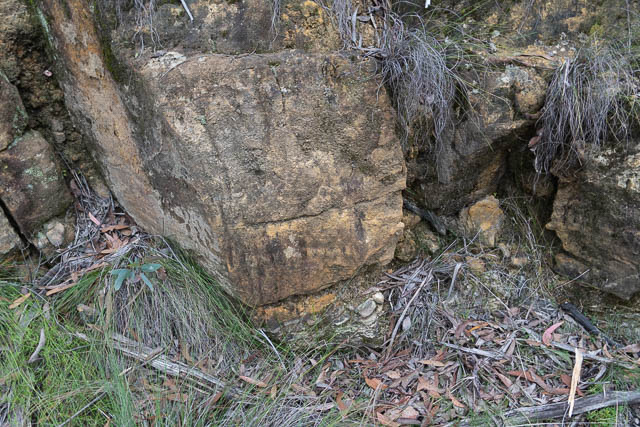
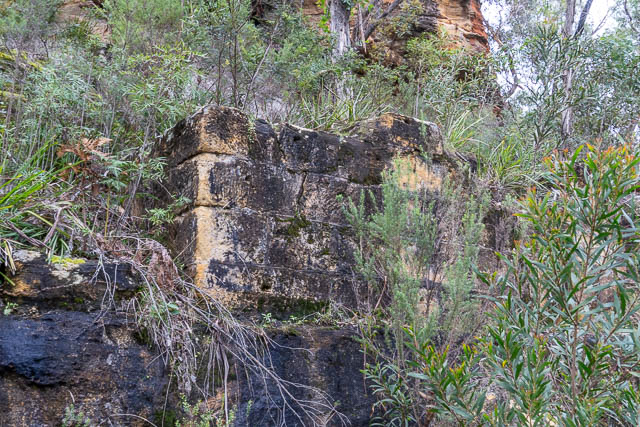
Old stonework –
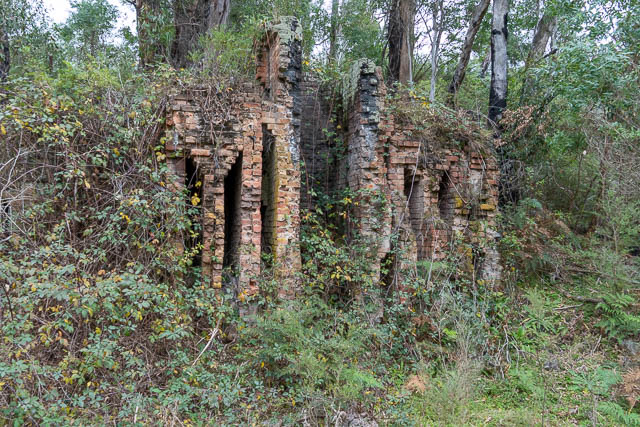
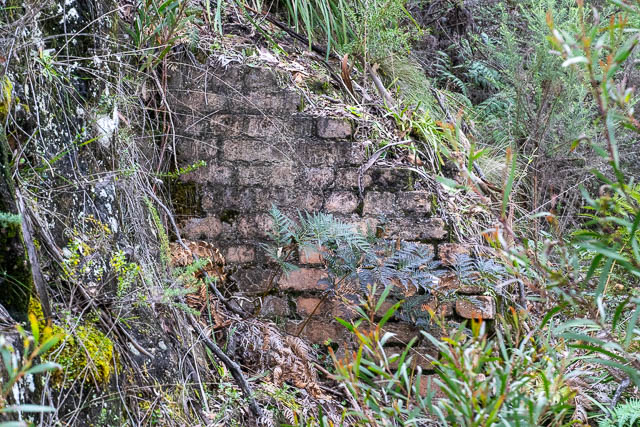
And old brickwork –

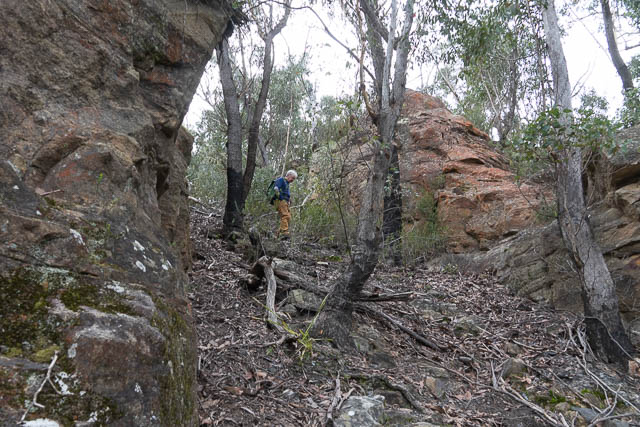
We were now at the start of the single rope incline.

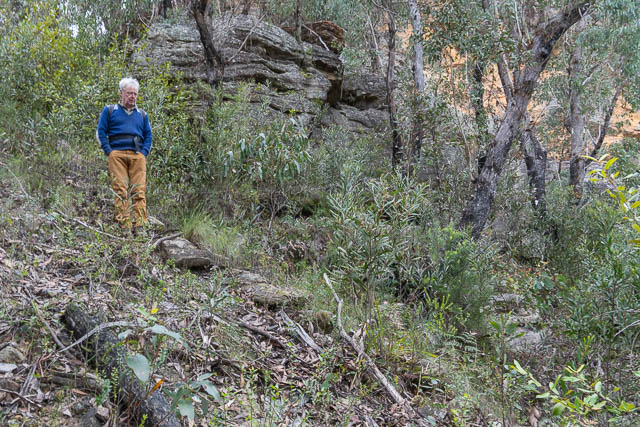
We made our way down, past more pick marks –
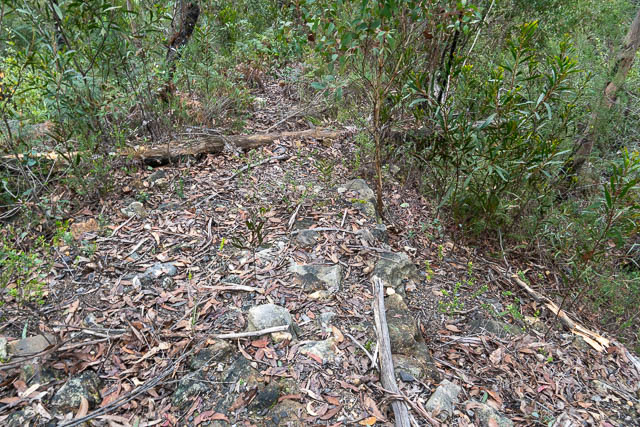
A relic –
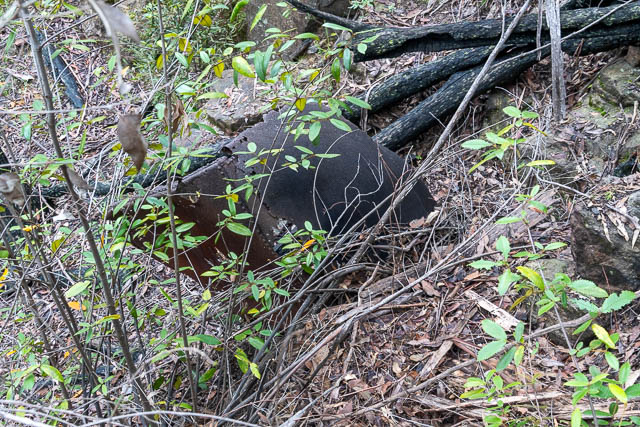
Perhaps a culvert-
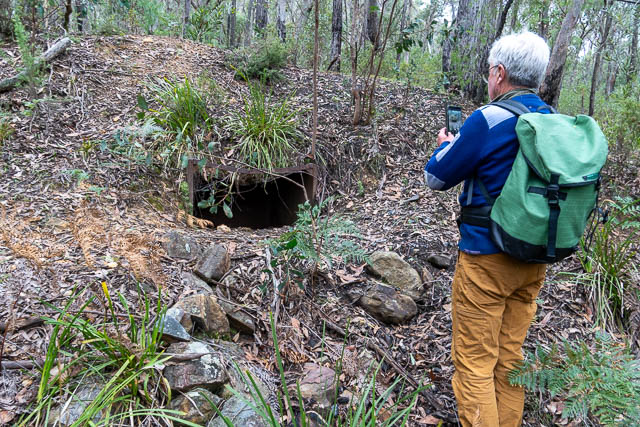
We found this old structure –
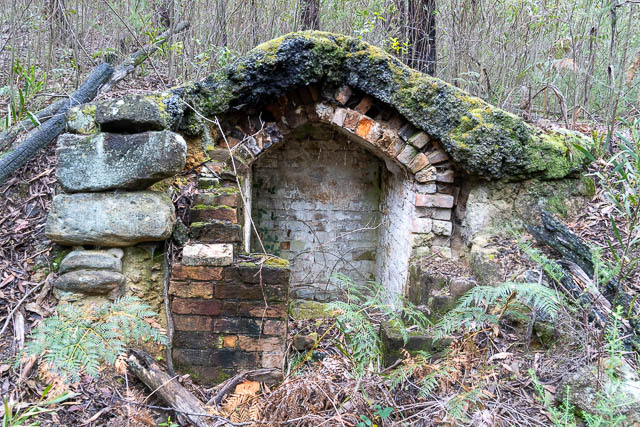
And here is the top of a ventilation shaft –
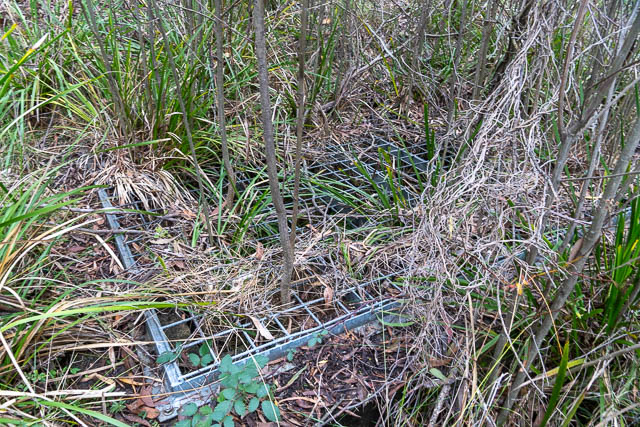
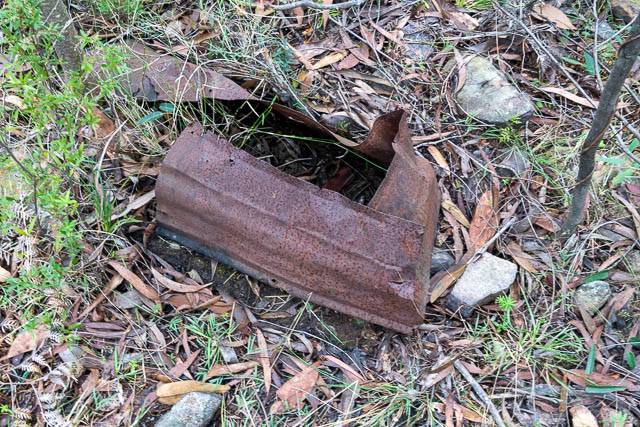
More relics –
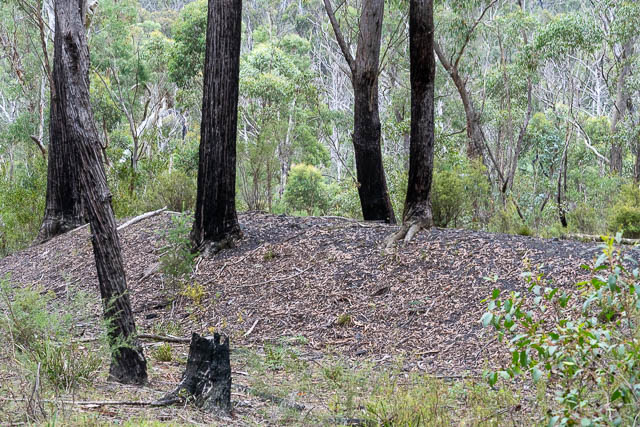
Shale ash heap –

We reached one of the old adits –
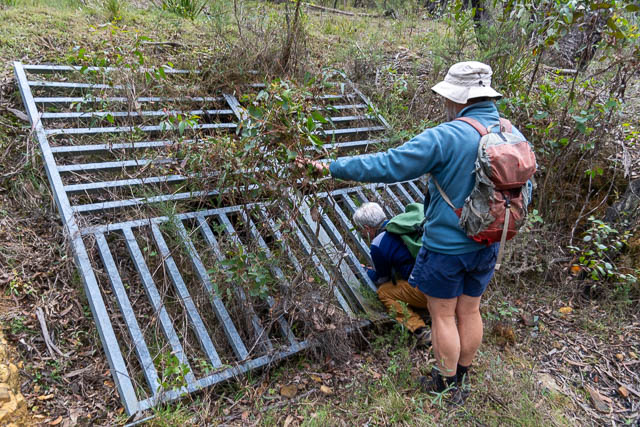
You could look in through the grill –
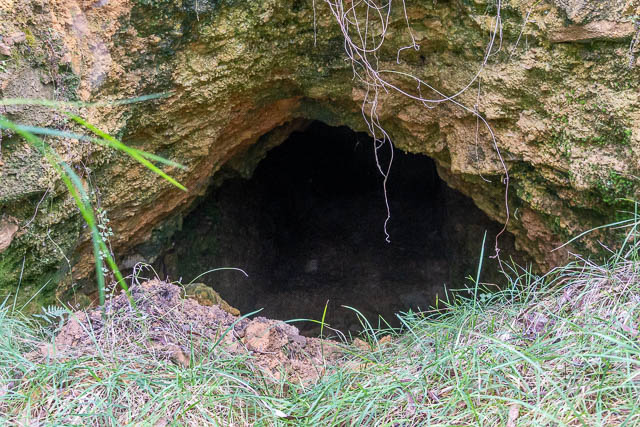
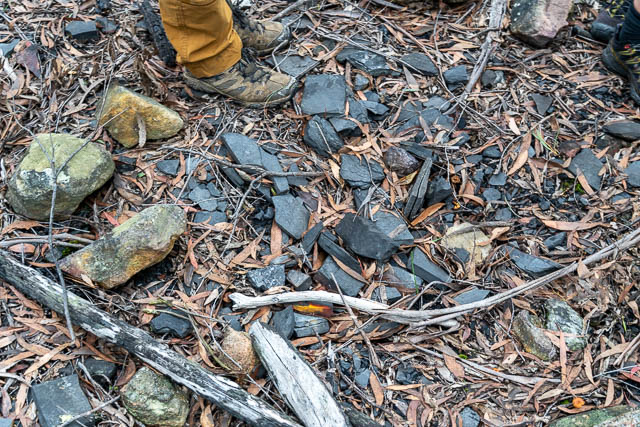
And there was plenty of torbanite – the oil bearing shale –
Down on the valley floor, we found this cut chair –
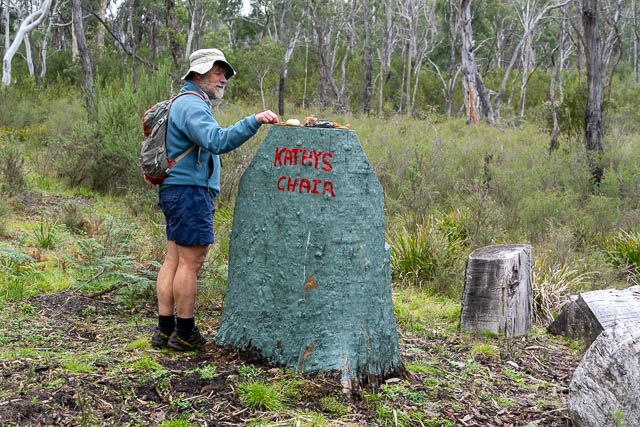
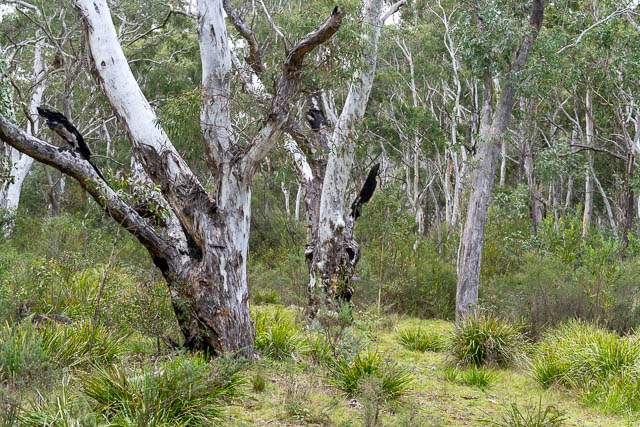
Perhaps this led to an adit?
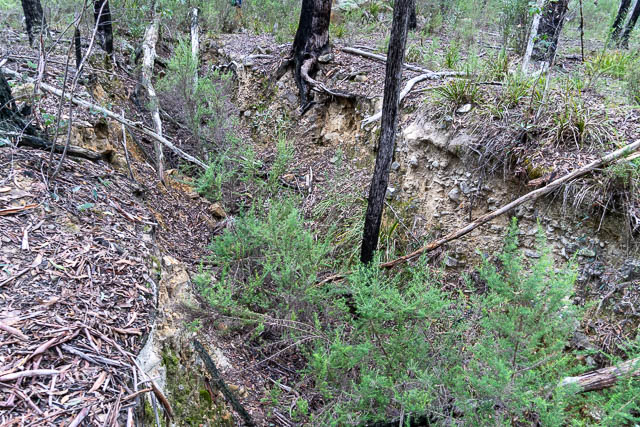
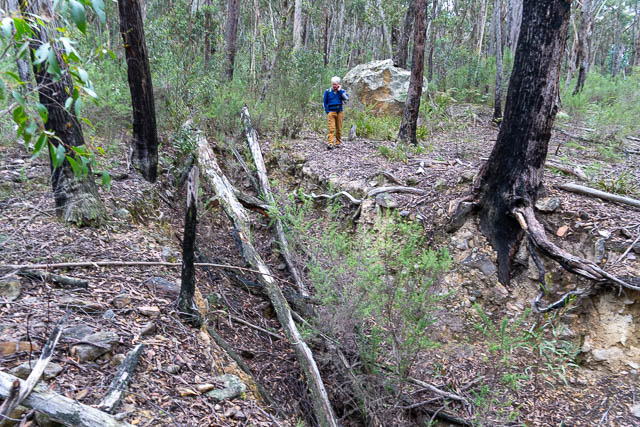
This could be another collapsed adit –
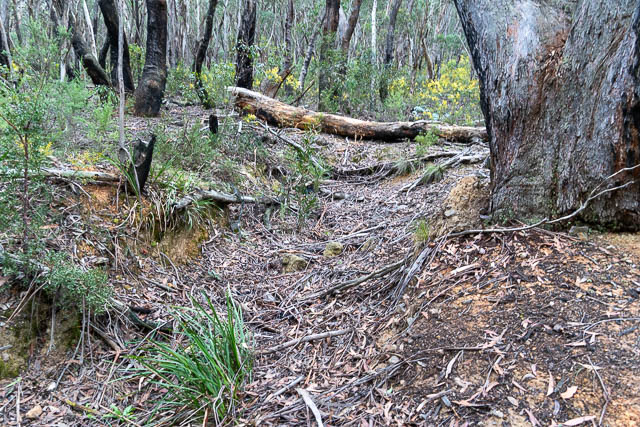
Old cut stone –
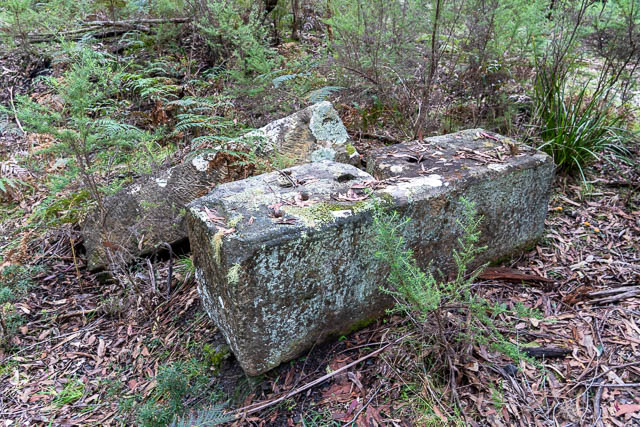
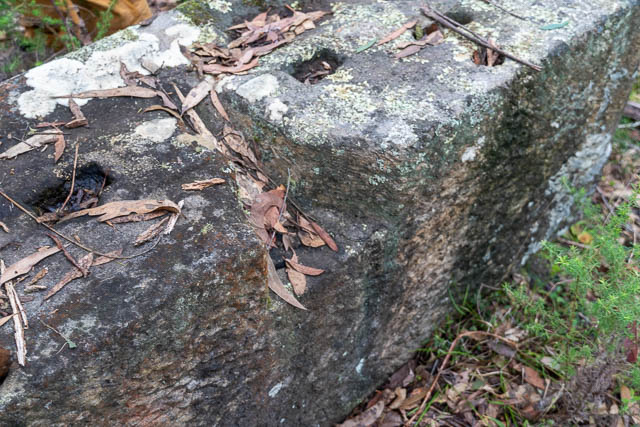
You can see where an axle used to lie –
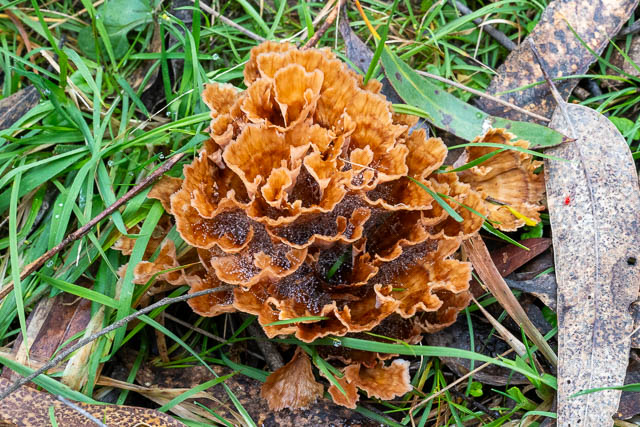
More fungi – Podoscypha petalodes –
Lawsons Long Alley –

More relics –
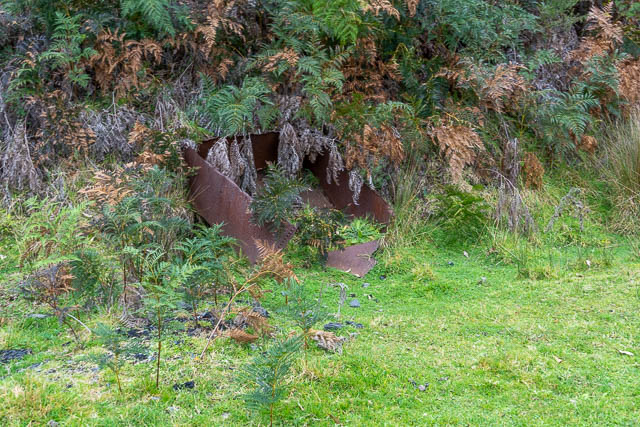
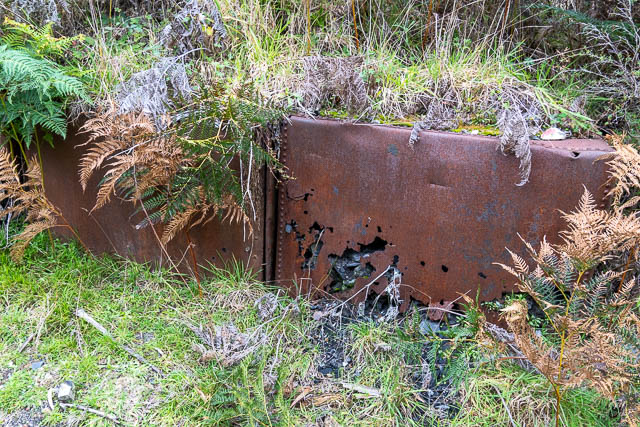
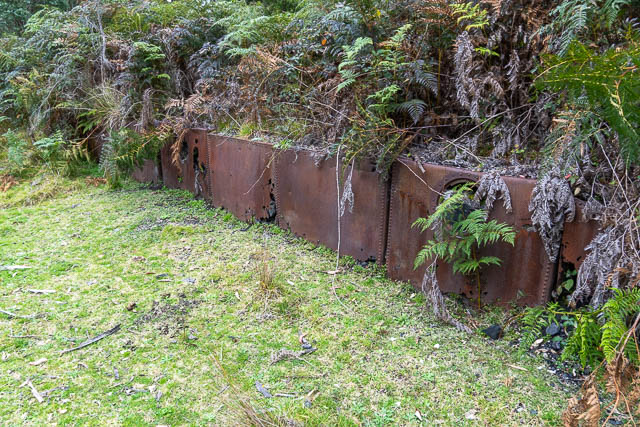
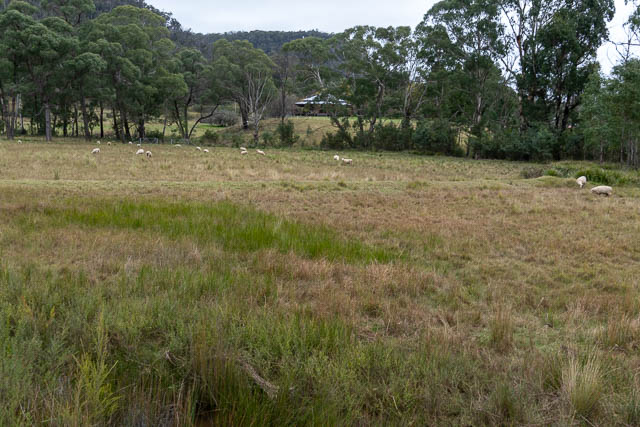
We found one old retort –
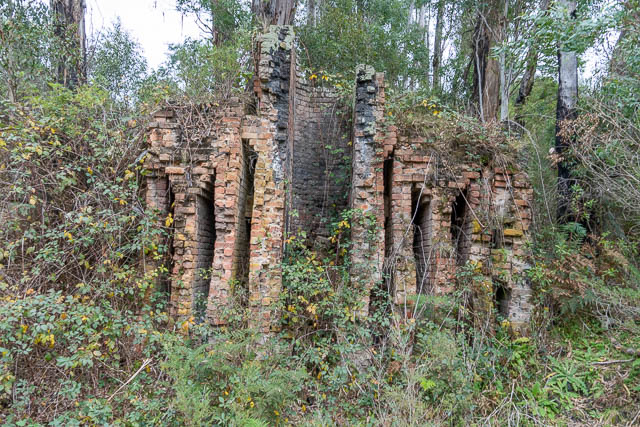

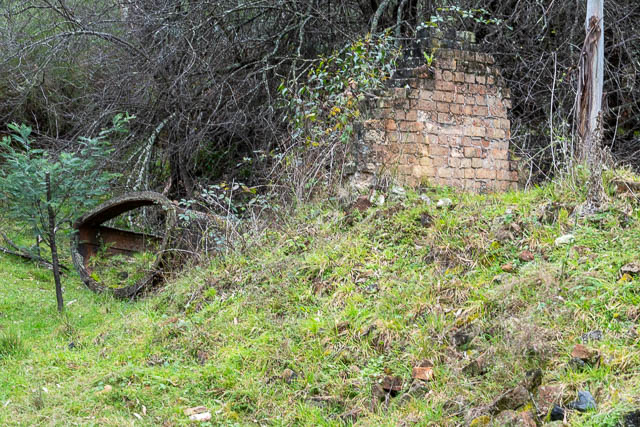

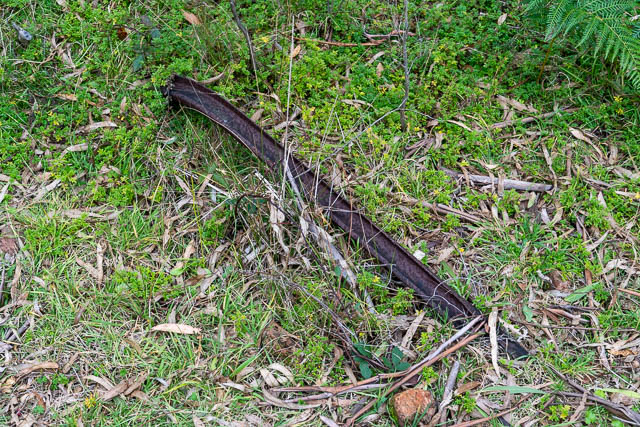
This was the site of an old velodrome. You can just make out part of the ring –
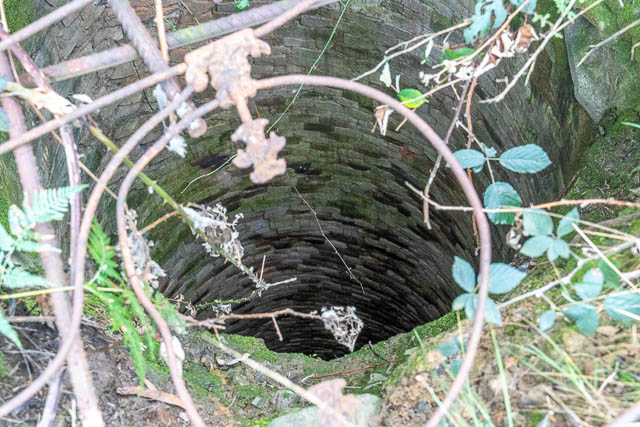
At one place, we found this deep vertical shaft. This could be from a coal mine. Coal was mined to heat the retorts which extracted the kerosene from the torbanite.
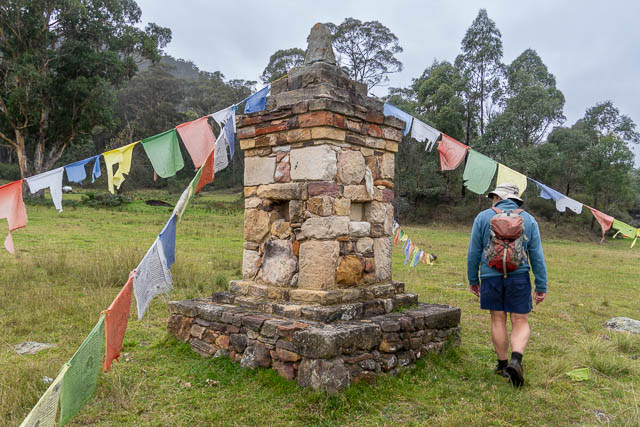
An there is a Lincoln Hall memorial –
Hartley Vale –
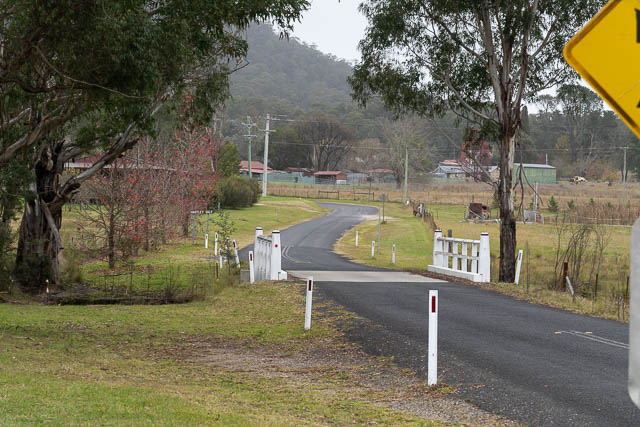
It was starting to rain, so we walked back via the Hartley Vale Road. I think we only saw one car. We did pass this interesting old coal mine adit –
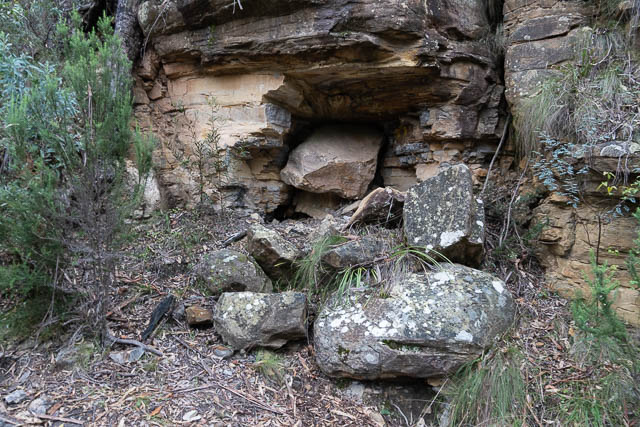
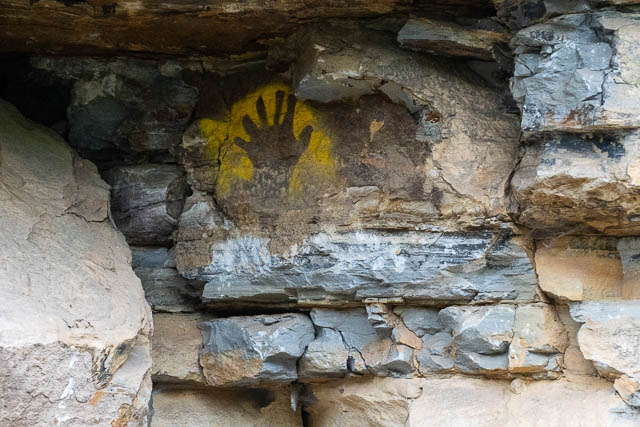
It has been blocked by a huge boulder. There is also this “handprint” –
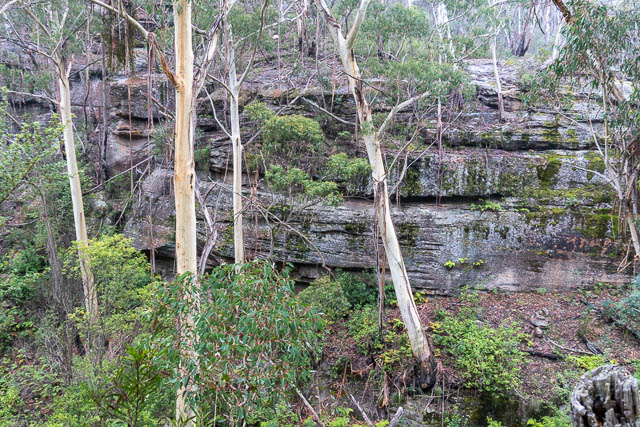
Near the top, Tom suggested we visit a nearby cave to shelter from the rain while we had lunch. This was a good idea.
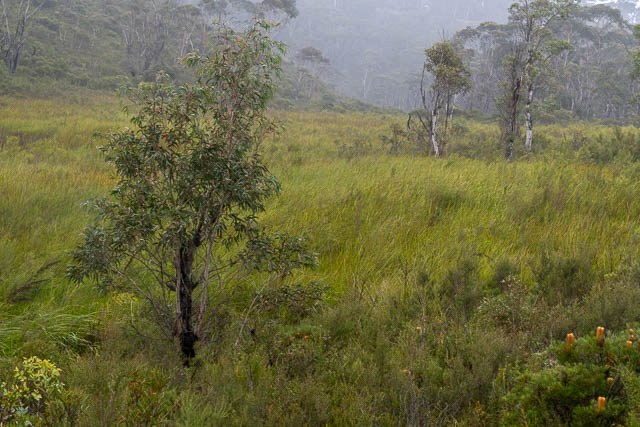
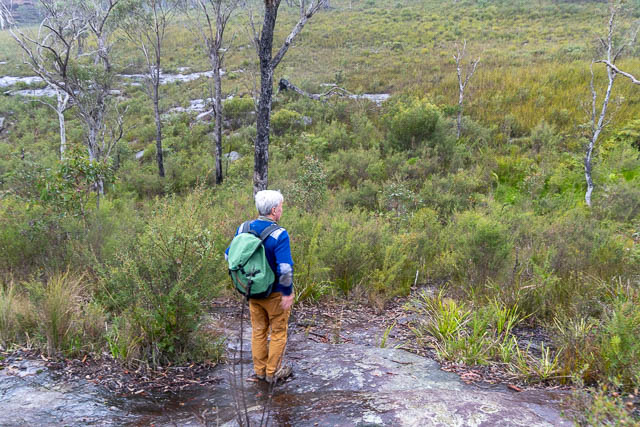
Inside our lunch cave –
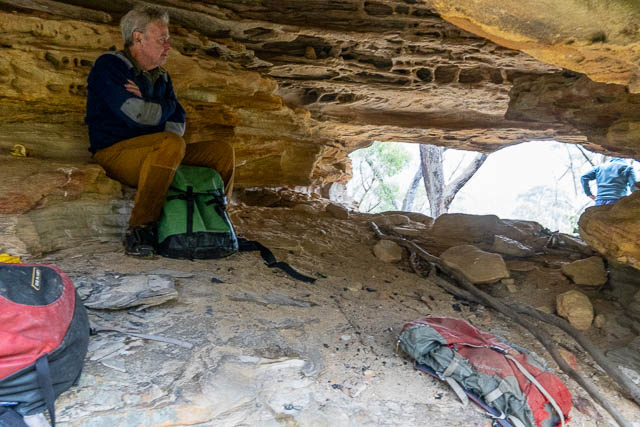
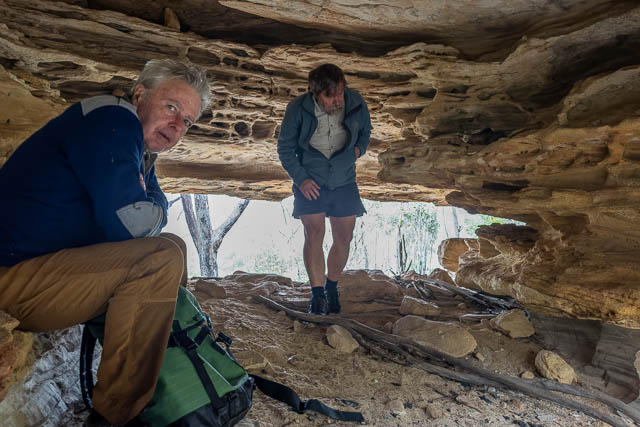
This had been a very interesting walk. Many thanks to Tom for contacting the landholders and asking for permission to visit this industrial heritage.
Hi Dave,
I recently came upon your blog item: The Old Kerosene Shale Works at Hartley Vale – 29 May 2025. I have walked along the rail formation to the top of the incline many times, the first time being many years ago before the appearance of the gate and “private property” sign.
The reason for my interest is related to the fact that the “crushed lightning conductor rod” used as a prop in undergraduate physics lectures in the School of Physics at the University of Sydney came from the Hartley Vale refinery. A tubular section of the lightning conductor was crushed by a lightning strike at the refinery in or around 1905. The mine manager sent it to Prof Pollack at the University of Sydney. As a result a paper was published by Pollock and co-author Barraclough in the Journal of the Royal Society of NSW in 1905 in which they explained how electromagnetic forces associated with the large current explained the crushing, and were able to estimate the magnitude of the current. This is accepted as the first publication to invoke this electromagnetic phenomenon, now known as the pinch effect.
To acknowledge the centenary of this publication I gave a talk about it to the Royal Society of NSW, and wrote an article for “Australian Physics”, the members’ journal of the Australian Institute of Physics. Some years ago I provided details to the Mount Victoria and District Historical Society Museum, but as far as I know there is no mention in the Museum.
Thanks Brian – very interesting.