I got up early on the morning of the 2nd December, before 4 am, in order to photograph the ISS as it passed over Sydney. I had used the ISS app on my phone to see where the Space Station was likely to be in a good position for photography (you can also use websites like this NASA one)Its orbit oscillates and every few months it can be in a suitable spot either as an early evening object or a just before dawn. It needs to be those times in order to be seen at night, and still illuminated by the Sun.
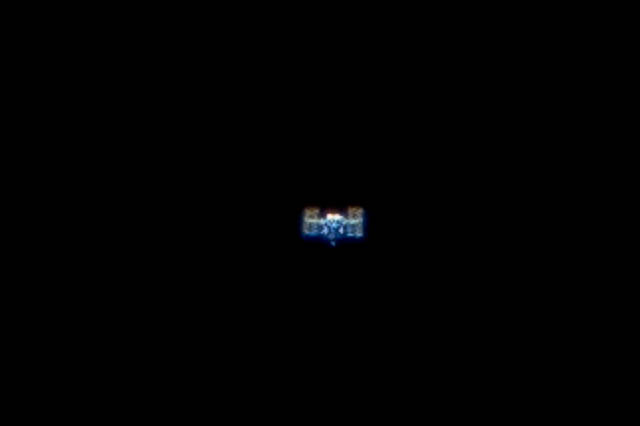
Often the ISS passes over a fair way from your location, and at a low angle – eg 20° above the horizon at its maximum angle, and therefore not that bright. This morning was forecast to be a maximum angle of 84° and a brightness of magnitude -3.6 (the brightest star, Sirius, has a maximum brightness of -1.6, and Venus has a maximum brightness of -4.4, so the ISS should be quite bright). Also, at an angle of 90°, the ISS would be straight overhead at its closest approach. Its height above Earth varies from 330 km and 435 km. Continue reading