I joined Enmoore, Stu, Wendy, Martin, Steffy, Su Li, Brent, Jude (NPWS), George and a number of others for a morning of bush regeneration at Barrenjoey. Because of recent rain, and the threat of rain on the day we weeded on the top of the headland – close to the lighthouse.
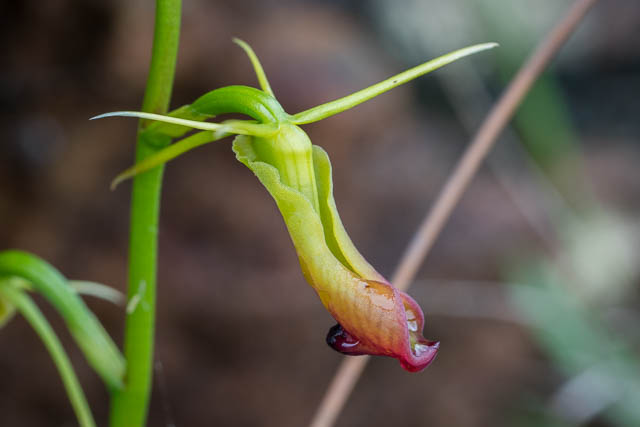
On the way up to the lighthouse, we passed several groups of Large Tongue Orchids and some Christmas Bells. Continue reading →
I joined the Tempe Birdos in the morning on Saturday for their monthly bird surveys at the Tempe Wetlands and the nearby park. We spotted and recorded a lot of birds despite some wet weather.
After the bird surveying ended, I headed back to the wetlands to see if I could photograph some of the birds that we had seen earlier. More light rain made this difficult, but I did manage to grab a few shots. Continue reading →
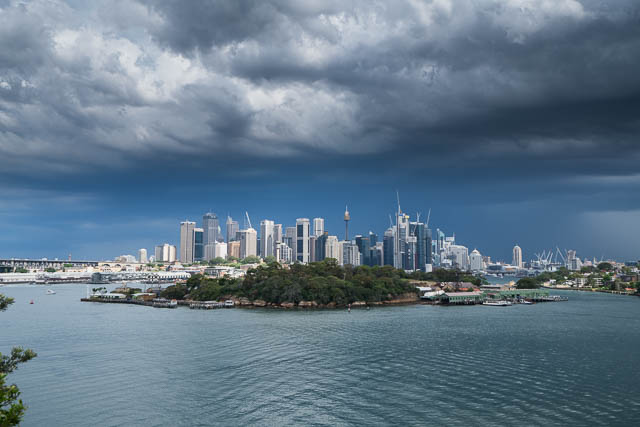
This visit I had better luck with thunderstorms. I spent a couple of hours at Balls Head on a thundery afternoon. When I arrived – a thunderstorm had just passed over – and was now just above the city. But the radar showed more storms were on the way.
The city and Harbour Bridge did look quite dramatic in the stormy lighting. Impressive! Continue reading →
I went for a bike ride along the Cooks River taking my camera with me to see if any interesting birdlife was out and about. First I went to the Tempe Wetlands for a quick look then rode along the cycleway up the river to the wetland at Cup and Saucer Creek.
At Tempe, I saw some of the usual birds – New Holland Honeyeaters, Willie Wagtails, Wattlebirds and Welcome Swallows. Continue reading →
Keith had organised this walk for Chris and myself. Also on the walk was Keith’s wife Rose. We all used to regularly walk together back in the 1970’s and we had shared many great adventures in the bush.
We made our way up to the Central Coast and to Bouddi National Park. The car was parked at the end of Grahame Drive and we started walking first down to Little Beach. This was an attractive spot with a nice camping area and a sheltered cove. Continue reading →
I have recently been experimenting with some time lapse movies of Aseroe rubra stinkhorns emerging from their eggs. I have not observed them emerging before and didn’t know how long they take to start emerging, and then once they do emerge, how long they take to form. So at first I had two cameras set up taking stills with the stinkhorn eggs in plastic trays in my kitchen. I left the light on overnight. Next morning one of the eggs had opened.I checked on the camera – the stills had been turned into a movie and it seemed OK. For the other eggs nothing much had happened, so I reset the cameras and left one camera to continue taking photos of another egg that was partly open. Nothing happened till later the next day. Here the resulting video is very poor – as the lighting changed a lot during the day as sunlight shone in at times.
Here is the resulting video on YouTube –
The first section was filmed using one frame per minute, with the camera set up overnight. The stinkhorn continued growing after I stopped filming – and I should have let it continue longer. The stinkhorn took 3-4 hours to emerge,and then probably grew after that for another few hours. The second one was filmed at one frame per 10 seconds. This seems too slow. I think a better frame rate may be one frame per 20 – 30 seconds.
I headed up the mountains with Bob. He was keen to visit Orang Utan Pass. This is a pass of historic interest. It goes down into the Grose Valley at Surveyors Creek and near Clarke Head. It was used by Tim Wallace around 1928, when he set up a flying fox into the valley to extract timber. After he found the way down, he then set up a ladder down the waterfall in Surveyors Gully -a more direct route. The pass was also used by early bushwalkers – Wally Roots, Harold Chardon and Tom Herbert in 1932.
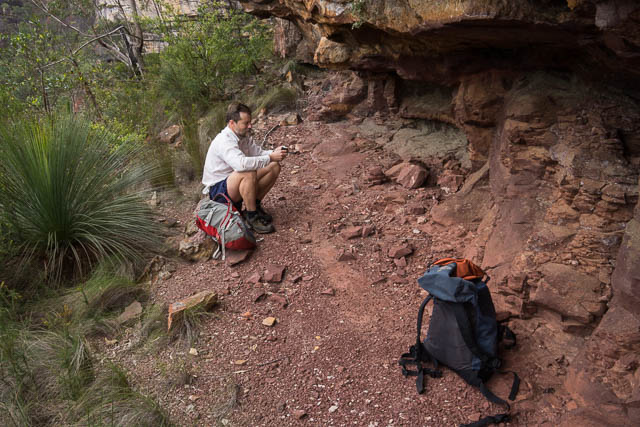
Bob in the cave on Orang Utan Pass
We parked at the Hat Hill carpark on the road to Perrys Lookdown (Hat Hill Rd). Instead of walking up the track to Hat Hill, we turned the opposite direction to look for a track that goes out to near Clark Head. This track soon passes a historic site – the ruins of an old hermits hut which is quite interesting. The hermit lived in the stone hut well into his 80’s back in the 1920’s. Continue reading →
Earlier on my blog, I put a short post about a new video I had seen that highlighted the many beauties of the Tahmoor Gorge in the Southern Highlands. Recently, on social media, there was a posting asking concerned people to sign a petition to the Wollondilly Council asking them to limit development in the area. A housing development is planned for the area near the confluence of the Bargo and Nepean Rivers. This is just downstream from the Tahmoor Gorge. The petition calls for a suitable buffer to be left between the development and the Gorge. Council is expected to vote on this issue on November 16 – so please consider signing the petition.
It was interesting wandering along the Cooks River looking at the birdlife. I first noticed a white faced heron that had caught a small fish and then quickly ate it.
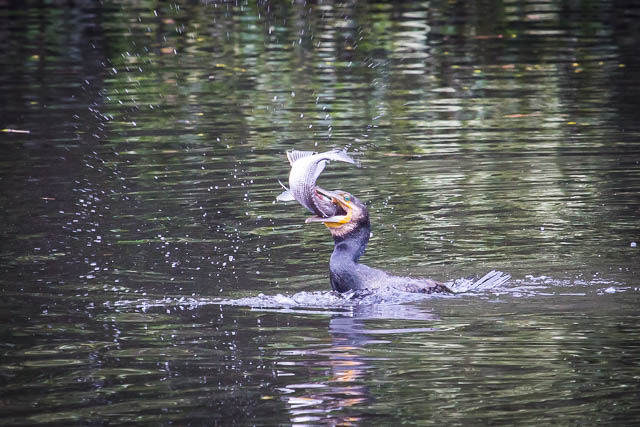
Cormorant with fish
I then went to the Cup and Saucer Creek wetland to see how the baby moorhens were going. They were fine, but their mothers alway seem to keep the chicks a long way from good vantage points and make them hard to photograph. Continue reading →
During the past few weeks, rain has encouraged the fruiting of a lot of stinkhorns in my local area. Most abundant, in a park at Dulwich Hill are a huge number of Aseroe rubra or the Anemone Stinkhorn.
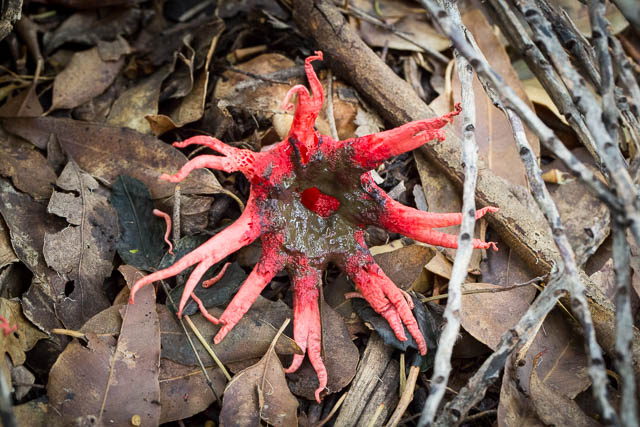
Fresh Aseroe rubra with gleba
These interesting fungi emerge from an egg like structure. When fresh, the top of the fruiting body is covered with a brown slimy substance known as gleba. This is foul smelling and attracts flies and other insects that eat it and consequently help spread the spores of the fungus. The spores spread by passing through the digestive system of the insect. Continue reading →